The Closeness of God

“You answer us with awesome and righteous deeds, God our Savior, the hope of all the ends of the earth, and of the farthest seas, who formed the mountains by your power, having armed yourself with strength, who stilled the roaring of the seas, the roaring of their waves, and the tumult of the nations. The whole earth is filled with awe at your wonders; where morning dawns, where evening fades, you call forth songs of joy.” (Psalm 65:5-8) 

I love sunsets. Any of you who follow me on Facebook probably know that by now, given the number of sunset photos I have posted through the years. From the comfort of my deck I have a front row seat to the sun setting each night over the Blue Ridge Mountains to the west of my home in Western North Carolina. That view inspired the name for this blog, Ridgetop Reflections.

imageIt amazes me just how unique each sunset appears. Quite often they take my breath away and sometimes even leave me in tears. They never fail to remind me of the closeness of God’s presence. And I don’t believe it is a coincidence that the most awe-inspiring sunsets seem to appear when I most need to be reminded just how close God actually is.

In the Scriptures God reminds us over and over that he is always with us. When Moses felt inadequate for the task God assigned him, God reassured him “I will be with you.” (Ex. 3:12)  When Joshua felt unworthy of replacing Moses and incapable of leading Israel into the Promised Land, God challenged him to “Be strong and courageous. Do not be terrified and do not be discouraged, for the Lord your God will be with you wherever you go.” (Joshua 1:9)  When Jeremiah objected that he was too young to serve as God’s prophet, God declared, “Do not be afraid of them, for I am with you and will rescue you.” (Jer. 1:8)

The familiar words of the 23rd Psalm echo “Even though I walk through the valley of the shadow of death, I will fear no evil for you are with me; your rod and your staff, they comfort me.” (Psalm 23:4)  When God himself made his dwelling among us in the person of Christ, his name as foretold by Isaiah was Immanuel (Isaiah 7:14), which literally means “God with us”. (Matt. 1:23)  And through the person of the Holy Spirit, God fulfills his promise to be with usalways, to the very end of the age.” (Matt. 28:20)

When you face the inevitable trials and heartaches of this life, take time to reflect on those promises from God’s Word. Remember that the God who created us and who made his dwelling among us in the person of Christ now lives within us in the person of the Holy Spirit. Even in our darkest days, when sometimes he seems so distant, God is closer than we realize.

If you don’t currently have a sanctuary where you are able to just be still and sense his presence, I encourage you to find one and return to it often. As for me, I can’t wait to see the sunset he paints for me tonight!

“The most holy and necessary practice in our spiritual life is the presence of God. That means finding constant pleasure in his divine company, speaking humbly and lovingly with him in all seasons, at every moment, without limiting the conversation in any way.” – Brother Lawrence, The Practice of The Presence of God

Note: All Scripture references from the New International Version (NIV)

Facebook Impostors

image“But evil people and impostors will go from bad to worse as they deceive others and are themselves deceived.” (2 Tim. 3:13 NIV)

Facebook has been a valuable social media tool, allowing me to reconnect with a number of former classmates and friends I have made in my travels around the country during the course of my career with the Federal Prison System. As a retired grandfather, I love seeing the latest photos of my grandchildren’s exploits and adventures. As a blogger, it provides a convenient means of distributing my latest posts.

But like any good thing, it can be misused by those with less than honorable intent. Such was the case recently when someone established a fake Facebook account in my name and sent friend requests to many of those on my friends list. Thanks to the help of several people, I was able to resolve the situation fairly quickly without any detectable negative consequences.

In the aftermath of this incident, I have discovered that my experience is not so uncommon. The photos and other information in one’s Facebook profile can be fairly easily accessed and copied to create a clone account. The impostor then sends new friend requests to individuals in your friends list, hoping that they will routinely accept it without questioning why they are receiving another friend request from you. A few months ago, my wife accepted a friend request from someone who had cloned the account of one of her friends.

If you receive a friend request from someone you have already friended on Facebook, you are the first line of defense against Facebook impostors. Do not assume your friend has set up a new account and click “Accept”!  Instead, contact your friend through other means (text, phone, message) to determine if they indeed sent you another friend request. In my case, I received two messages on the Messenger app and a phone call from another friend within the span of ten minutes.

If you discover that your account has been cloned, immediately post a notice on Facebook. The message I posted was “Someone has apparently set up a Facebook account in my name and with my picture and is sending out friend requests to my Facebook friends. Please ignore – it is not me!” I also tagged each of my Facebook friends to increase the likelihood that they would actually receive the notice.  If you are able to access the fake account, there is a process (described below) to report the account to Facebook. I was unable to access my fake account, thus undermining my attempts to report it. The impostor had most likely blocked me when the account was established.

If you are unable to access the fake account yourself, actions by your friends who initially receive the request are critical. When you have received such a friend fb1request and verified that it is a cloned account, report the account to Facebook. When you click on the fake profile, you will notice three dots just to the right of the “Message” block. When you click on those dots, a menu will drop down which will include an option to “Report”. When you click on “Report”, follow the instructions to report this account as someone impersonating your friend. Thanks to quick actions from a couple of my friends, my impostor‘s account was removed within 24 hours.

To protect yourself, be very discerning about accepting friend requests from people you do not know. Do not assume that since they are friends of some of your friends, there is no harm in accepting their requests. Also review your Facebook privacy settings to make sure that your personal information, photos, and posts can only be seen by those you wish to have access to them. For information on Facebook privacy settings, <Click Here>.

Beware of data-mining Facebook posts. These come disguised as posts designed to tug at your heart strings or arouse your political passions. Examples include “Type amen if you love Jesus”, “Help this disabled veteran or crippled child get one million likes”, or the latest popular iteration, “Like and share if you believe Candidate X is right for America”.  Many, if not most, of such posts are nothing more than data-mining tools to gain access to your Facebook profile.

If you have inadvertently accepted a friend request from a Facebook impostor, beware of Facebook Messenger requests from your impostor “friend” asking for money to get out of jail in Nigeria or inviting you to check out an opportunity for free money they received, noticing that your name was also on the list. The worst case scenario might include a link which installs malware on your computer, tablet, or phone which allows the impostor to track your activity and gain access to financial accounts.

According to an article I read recently, such impostor activity is on the increase lately. I encourage you to share this post on your Facebook timeline to alert your friends and hopefully keep it from happening to you.

Cyberspace can be a dangerous place. Be smart and be very careful out there.

“Be very careful then, how you live – not as unwise but as wise, making the most of every opportunity, because the days are evil.” (Eph. 5:15-16 NIV)

To The Fields!

By Julian Wells

Series: Lessons From The Cotton Field

“When he saw the crowds. he had compassion on them, because they were harassed and helpless, like sheep without a shepherd. Then he said to his disciples, ‘The harvest is plentiful, but the workers are few. Ask the Lord of the harvest, therefore, to send out workers into his harvest field.” (Matthew 9:36-38 NIV)

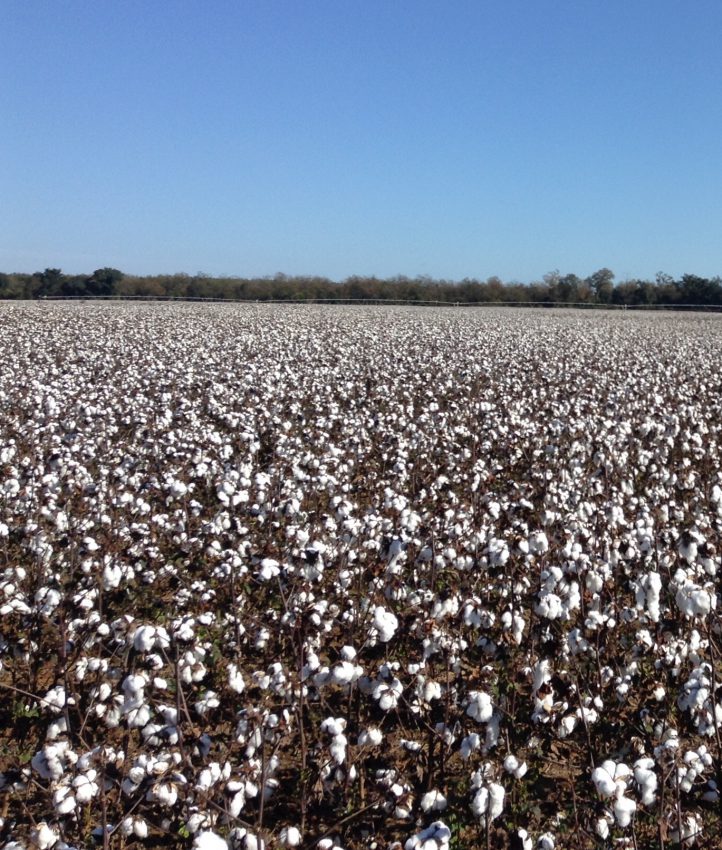
imageMy wife recently purchased a stalk of cotton, placing in it in a vase to serve not only as a decoration for our living room, but also as a reminder of this series and the lessons I learned in the cotton fields of my youth. Last year, as I drove by those same cotton fields in South Georgia that inspired this series, the above verses from Matthew’s gospel came to mind. They reminded me of one last lesson from the cotton fields which, while seemingly obvious on the surface, is often neglected in practice.

As I recall those days, I’m reminded that very little work was ever accomplished in the comfort of our home. Daddy would educate himself on the latest developments in the propagation, maintenance, and harvesting of crops. But all the work that had a true impact- the preparation of the soil, the planting of the seed, the application of fertilizer, the initial removal of excess cotton plants, the hoeing of weeds that would choke the remaining plants, the spraying of insecticides to control boll weevils, and the eventual harvesting that put food on our table and clothes on our back – took place in the fields. As followers of Christ, the work he has commissioned us to carry out takes place in the fields as well.

On another recent trip south, my wife and I were in Callaway, Florida, just outside of Panama City, enjoying some time with our grandchildren before they returned to school. Just down Tyndall Parkway from the hotel where we stayed, there is a new church advertising itself as “the perfect church for imperfect people”. The most intriguing aspect to me about this church is its location next door to a small plaza housing an electronic cigarette shop, a payday loan lender/pawn shop, and a tattoo parlor.

Initially struck by the irony of the site selection committee’s choice of that location, my views changed as I reflected upon the true mission of any local church. Those establishments next door exist to fulfill the perceived needs of imperfect people, be they financial, addictive, or simply products to establish or bolster an identity – needs that are better addressed by the Gospel of Christ which is now being proclaimed in that new building among that sea of imperfect people.

Sometimes we tend to forget that the bulk of the work for which we have been commissioned takes place in the fields of those imperfect people who are often more like us than we dare to admit. We grow too comfortable in our enclaves of fellow believers, preaching to and teaching one another, taking Bible study after Bible study, and enjoying the fellowship of other like-minded believers, while the world around us is starved for the hope that only the Lord we proclaim can provide.

It is fitting and proper that we gather to worship our Lord, to enjoy fellowship with one another, to encourage and pray for one another, and to equip ourselves for the greater work of spreading the Good News. But we must never forget that the greater work takes place outside the walls of the church building. We are called to be salt and light in a world filled with imperfect people and in a culture that is often hostile to our message.

Rather than withdrawing from that culture, we should engage it as Christ did, realizing that a life modeled on Biblical principles is a powerful testimony in itself. Then we must be prepared to give an answer for the hope that others see in us. (I Peter 3:15)

After class some years ago, a dear friend once commented that she wished she knew the Bible as well as I do. I replied, “I wish I lived the Bible as well as you do!” On the night before his crucifixion, Jesus said to his disciples, “I have set you an example that you should do as I have done for you. I tell you the truth, no servant is greater than his master, nor is a messenger greater than the one who sent him. Now that you know these things, you will be blessed if you do them.” (John 13:15-17 NIV)

Unless we put its teachings into practice, few people will ever be impacted by our knowledge of the Scriptures. James 2:17 says “In the same way, faith by itself, if it is not accompanied by action, is dead.” Faith without works and knowledge without action, like that stalk of cotton in my living room, is little more than a decoration.

As I learned in the cotton fields of Georgia, the work of growing the Kingdom of God takes place in the fields – not in our comfort zones. The harvest is still plentiful and all too often the workers are still too few. That might not be the case if we were as concerned over the fields of lost people all around us as we are uncomfortable around some of them.

All too often the church holds up a mirror reflecting back the society around it, rather than a window revealing a different way.” ~ Philip Yancey

Harvesting The Crop

By Julian Wells

Series: Lessons From The Cotton Field

“Do you not say, ‘Four more months and then the harvest?’ I tell you, open your eyes and look at the fields! They are ripe for the harvest. Even now the reaper draws his wages, even now he harvests the crop for eternal life, so that the sower and reaper may be glad together. Thus the saying ‘One sows and another reaps’ is true. I sent you to reap what you have not worked for. Others have done the hard work, and you have reaped the benefits of their labor.” (John 4:35-38)

Harvest was my favorite season on the cotton farm. The weather was usually cooler at cotton picking time, making the labor a bit less unpleasant. The trips to the cotton gin in Locust Grove, riding in the back of Daddy’s truck, were a special treat. I could usually expect a Coke and a pack of peanuts to enjoy while the cotton was unloaded, weighed, and ginned.

For Daddy, those trips were the payoff for months of hard work in the fields. Perhaps that is why he let us share some of the profits, paying his children the same 3 cents/pound the other laborers received for picking cotton – the only farm chore for which I was ever paid. But more importantly for me, the harvest meant six months of rest before we started the cycle anew the following Spring.

When Jesus spoke the words above to his disciples after his encounter with the Samaritan woman at the well, cotton was the last thing on his mind. His focus was on the harvest of souls for eternal life. Responding to the disciples’ concern for his physical nourishment, Jesus said, “My food is to do the will of him who sent me and to finish his work.” (John 5:34) As his disciples, that should be our food as well.

During my time in Denver, Colorado, my pastor, Rick Ferguson, would often talk about approaching Denver on I-70 from the Rocky Mountains to the west of the city, seeing the city lights spread below, and grieving for the lost residents who would never know Christ. Like our Lord, he had the spiritual vision to see the fields ripe for the harvest of souls.

As Christ’s followers, we should have that same concern for the lost and that same spiritual vision to see the fields around us that are always ripe for harvest. There should never come a season of rest from that work. Unlike with cotton, it is not always readily apparent to us when a soul is ripe for harvest. But never forget that we are not the reaper of lost souls. That is the responsibility of our Heavenly Father through the work of the Holy Spirit.

Our job is simply to be spiritually discerning and obedient to his leading, preparing the soil of people’s hearts as we live a life grounded in Biblical principles, planting seeds of the gospel as we interact with the lost around us, and being prepared to share our personal gospel story when the time is appropriate.

The joy shared by the sowers and reapers at the harvest of souls far surpasses that joy I felt when the cotton harvest was completed. But unlike those cotton harvests, we may not always see the fruit of our labor in this life. My Granny Wells never knew the ultimate spiritual impact she had on me – the fruit of her labor did not ripen in my life until years after her death. But because of her faithfulness, I look forward to sharing that joy with her one day in Glory.

Recently I read the story of Dr. William Leslie, who began serving as a medical missionary in a remote corner of the Congo in 1912. After 17 years he returned to the United States a discouraged man, believing he had failed to make any discernible impact for Christ. He died nine years after his return, regarding himself a failure in his life’s calling. In 2010, a network of churches was discovered in eight villages scattered along 34 miles of the Kwilu River where Dr. Leslie had been stationed. When the tribal people were questioned about the origins of those churches, they only knew that it had been the work of a man named “Leslie” some 100 years earlier.

We never know who’s watching or whose life we’re impacting. We never know when the fruits of our labor as witnesses for Christ will ripen. But that joy Christ talks about in this passage will be ours one day, perhaps in this life, but most assuredly and most importantly, in the life to come, when we are reunited in the presence of our Savior with those we helped steer to the foot of the cross.

“But the one who received the seed that fell on good soil is the man who hears the word and understands it. He produces a crop, yielding a hundred, sixty, or thirty times what was sown.” (Matt. 13:23)

Note: All Scripture from the New International Version (NIV)

Remembering Daddy

Series: Lessons From The Cotton Field

“For the kingdom of heaven is like a landowner who went out early in the morning to hire men to work in his vineyard. … When evening came, the owner of the vineyard said to his foreman, ‘Call the workers and pay them their wages, beginning with the last ones hired and going on to the first’.

The workers who were hired about the eleventh hour came and each received a denarius. So when those came who were hired first, they expected to receive more. But each of them also received a denarius. When they received it, they began to grumble against the landowner. ‘These men who were hired last worked only one hour,’ they said, ‘and you have made them equal to us who have borne the burden of the work and the heat of the day.’

But he answered one of them, ‘Friend, I am not being unfair to you. Didn’t you agree to work for a denarius? Take your pay and go. I want to give the man who was hired last the same as I gave you. Don’t I have the right to do what I want with my own money? Or are you envious because I am generous?’ So the last will be first, and the first will be last.” (Matt. 20:1, 8-16)

Cotton farming in the days of my youth was very labor intensive. With a supporting cast of five children and a hard-working wife, my father could handle most of the work of preparing the soil and planting the seeds. But the process of chopping cotton, as I described in my last post, and gathering the harvest required him to hire additional help. After breakfast, he often began his workday by driving to various homes of farm workers in the area and transporting them to our fields.

The prevailing daily wage for chopping cotton in those days was $3.00. Unlike the scenario described in the Parable of the Workers in the Vineyard in the passage above, all the workers started their workday at the same time and worked the same number of hours as every other worker. While some were likely more skilled at chopping cotton than others, all received the same daily pay. (Except for the children of the landowner who received nothing! Did I mention that already?)

At harvest time, Daddy would hire those same laborers to gather the crop. But rather than paying a daily wage for picking cotton, each picker was paid a piece rate of three cents for every pound of cotton picked. A highly skilled picker could gather 200 pounds of cotton daily, doubling the wages they earned for chopping cotton. At the end of the workday, each worker’s burlap spread of cotton was tied up and weighed. Daddy carried a ledger in the pocket of his overalls in which he recorded each one’s daily pickings, totaling it at the end of the week to pay each his due.

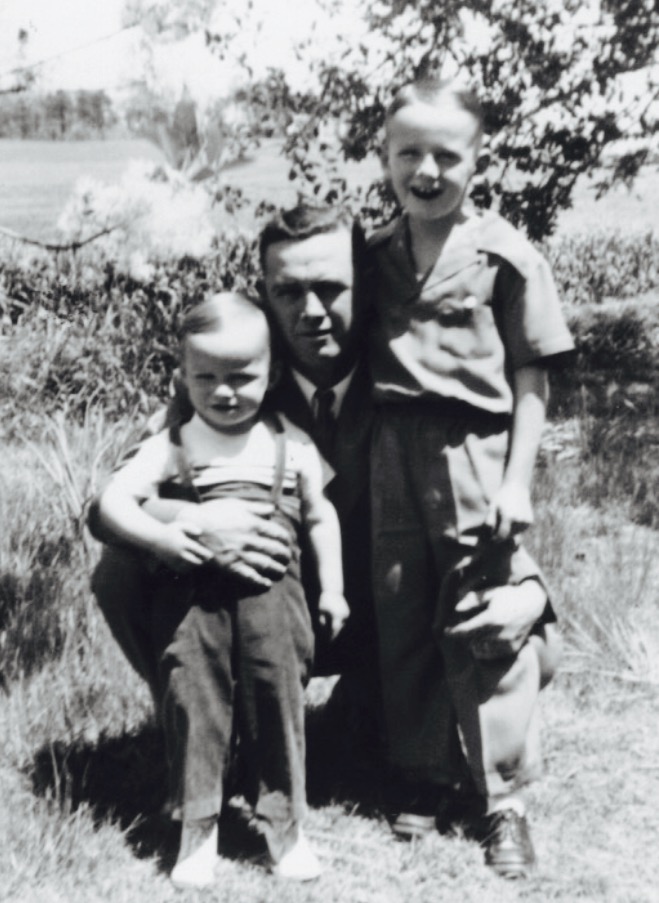
Writing this series of articles about growing up on a cotton farm has brought back many memories of my childhood and given me time to pause and reflect about my father, Sammie Paul Wells. While he rarely talked about his own childhood, life had surely been a struggle for him growing up on a farm himself. His own father died when Daddy was only ten years old. He was sixteen when the Great Depression hit in 1929. My selfish complaints about not being paid for chores on the farm seem petty when I consider what those early years must have been like for him.

We are all shaped by life experiences. His own life experiences gave Daddy a keen appreciation for the value of hard work. While he had his faults, laziness was certainly not among them. Hard work had undoubtedly sustained him through many difficult times and engendered within him a driving desire to be an independent businessman. Armed with only an eighth grade education, he not only ran a successful farm, he also maintained a profitable upholstery business for those times when there was no work to do in the fields.

Given his skills as a master upholsterer, I always felt he could easily have charged more for his services. He didn’t just recover furniture, he rebuilt it completely, replacing springs and batting to restore each piece as close as possible to its original condition. The quality of his work was unparalleled. But he had a sense of what his labor was worth and refused to charge more than that, no matter the market demand or the prices charged by his competitors.

As I consider those things about my father in light of this parable from Matthew 20, I’m sure he would have never entertained the idea of paying someone who chopped cotton for only the last hour of the day the same $3.00 he paid those who had borne the burden of the work in the stifling Georgia sun all day long. Had he done so, he would have soon lost many of the loyal workers he depended upon.

But this parable from our Lord is not a picture of man’s sense of a fair day’s wage for a fair day’s work. It is a picture of grace – the unmerited favor of God. In this parable, my father is not the landowner. He is that last hired worker who, like the thief on the cross, came to experience the unmerited favor of God in the eleventh hour of his life, placing his faith in Christ at the age of 59 while on his deathbed in the VA Hospital in Atlanta, Georgia.

And because of that, I can join so many others this weekend in saying, “Happy Father’s Day in heaven, Daddy!” And I will be eternally grateful for his close friend, Tony Hay, who refused to let him enter eternity without hearing about the saving grace of our Lord Jesus Christ once last time.

“The thief had nails through both hands, so that he could not work: and a nail through each foot, so that he could not run errands for the Lord; he could not lift a hand or a foot toward his salvation, and yet Christ offered him the gift of God; and he took it. Christ threw him a passport, and took him into Paradise.” – D.L Moody