
It’s About Time

“Teach us to number our days aright, that we may gain a heart of wisdom.” (Ps.90:12)

Recently I have been noticing a lot of attention being given to a concept called imagemindfulness. There was a segment on “60 Minutes” regarding this topic and a very interesting “Ted Talk” that I watched online. Without getting into too much detail about this latest cultural catchphrase, the gist of mindfulness seems to be rooted in the need to make the best use of one’s time by staying focused on the present and separating the truly important from the trivial.

Being mindful is about being intentional with our time, rather than allowing our time to be overwhelmed with trivia or other people’s priorities. In this day of Facebook, Twitter, Instagram, Snapchat, and so many other distractions, it‘s easy to fall into the trap of letting the unimportant and trivial dictate the use of our time rather than consciously managing it for our greater benefit. If we’re not careful, life will just happen to us until one day we’ll wonder where it went.

While the term mindfulness might seem to be a new concept, the truth is that God’s Word has much to say about it. The Scripture verse that heads this article, Psalm 90:12, was actually a prayer of Moses. Prov. 21:29 says, “an upright man gives thought to his ways.” Rom. 12:2 commands us to be transformed by the renewing of our minds. 2 Cor. 10:5 urges us to take captive every thought to make it obedient to Christ. Paul says in Eph. 5:15-16, “Be very careful then, how you live – not as unwise, but as wise, making the most of every opportunity, because the days are evil.”

Sports psychologists make their living largely by teaching their clients to “stay in the present”, forgetting the bad plays, the bad shots, the unforced errors, and focus instead on the next shot or the next play. Many of us could benefit by applying that advice to our lives. One of the things I most appreciated about my parents’ generation, The Greatest Generation, is that while they were shaped by their past, and often scarred by their past, they didn’t live in their past. They lived in the present while planning and creating a future – not just for themselves, but for future generations as well.

Practically speaking, for a Christian, mindfulness begins with Bible study and prayer. If you’re not setting aside time for that each day, then you will find yourself constantly walking in step with the world’s priorities rather than God’s. Prov. 3:5-6 says, “Trust in the Lord with all your heart, and lean not on your own understanding.”  Following this advice begins with prayer and Bible study.

J. Oswald Sanders, a noted Christian author, says “It is impossible for a believer, no matter what his experience, to keep right with God if he will not take the trouble to spend time with God. Spend plenty of time with him; let other things go, but don’t neglect Him.” In Col. 3:2, Paul commands us to “Set your minds on things above, not on earthly things.” In light of the resurrection that we celebrated last Sunday, we are called to live in awareness that our citizenship is in heaven. (Phil. 3:20) The Bible counsels us to be ALIVEAlways Living In View of Eternity!

But while God reminds us to live with eternity in view, he also reminds us to enjoy each present moment as well. The abundant life Jesus promises does not just lie beyond the grave – it is for here and now. Many people miss that underlying message in the Book of Ecclesiastes, written by a man who received great wisdom from God. While Solomon decried much of the meaninglessness of so much of the lures of this life, he encourages us to enjoy ourselves as well, finding satisfaction in good food and drink, in our work (Eccl.2:24), taking time to laugh (Eccl.10:19) and to cherish our families. (Eccl.9:9)

A few months ago, I watched a movie titled “About Time”. It was about a man who discovers the family secret that upon reaching adulthood, he would receive the ability to travel back to previous times in his life. He soon learned some of the drawbacks of trying to change some of his most painful and regretful experiences as he came to realize that many of those difficulties and disappointments led to some of his greatest blessings and treasures.

But the greatest lesson he learned was by following the wise advice of his father, who advised him that when traveling back to previous moments in his life, to be careful not to change too much. He recommended that he live each day twice: the first time as we normally do, experiencing each day’s inherent unpredictability and stress, and the second time focusing on savoring the small joys and special moments that often occur without us realizing how special they are or how much we’ll miss them later.

When my brother was placed in home hospice care last September, this was how heimage lived out the last four months of his life, cherishing each moment he had left with his wife, daughter, and his two precious grandchildren. When I didn’t think he had any strength left to be able to climb up on his tractor, I was overjoyed one day to receive this photo of him with his grandson, Owen, taking him for one last ride with Pappaw!

Ronnie learned the secret voiced so well by that great philosopher Tim McGraw of living like he was dying. While he didn’t go sky diving or Rocky Mountain climbing, and he certainly didn’t go 2.7 seconds on a bull named Fumanchu, he did take the time to love deeper, speak sweeter, give forgiveness he’d been denying, to grow closer to his Lord, and to treat tomorrow as a gift. He discovered that there’s no present like the time!

Perhaps that’s the simple message of the concept of mindfulness – live like you were dying. After all, we all are, you know!

Speaking of time, I suppose I’ve taken enough of yours. So, until next time, may the grace, joy, and peace of our Lord Jesus Christ be with you all. And may you number your days aright that you may gain a heart of wisdom.

“Show me, O Lord, my life’s end and the number of my days; let me know how fleeting is my life.” (Ps.39:4)

Note: All Scripture references taken from the New International Version (NIV)
The Message Of Easter

“Why do you look for the living among the dead? He is not here; He has risen! (Luke 24:5-6)

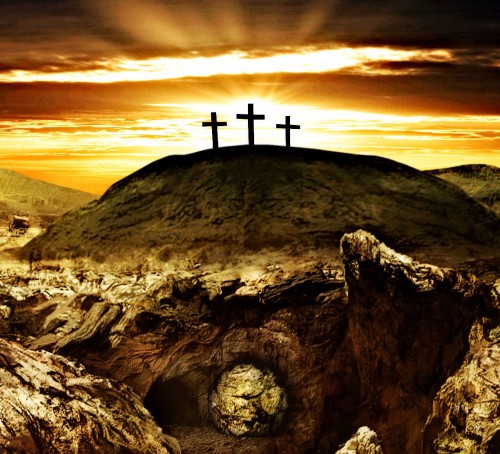
These familiar words from Luke’s gospel articulate the central truth upon which our faith is based. As I said in my last post, the Easter story is so familiar that teachers and preachers often struggle to offer some fresh insight or present some deeper truths to consider. But in reality, Easter is truly a time to just reflect on the truths that we already know so well – the truths that are foremost on our mind when we think of that first Easter morning … the message of Easter.

As you reflect on the message of Easter, what one word would you use to complete this sentence? ..  The message of Easter is a message of _________.  As I reflected on that first Easter this week, I thought of numerous words that fill in that blank quite well.

A Message Of Love

Jesus’ death on the cross is the ultimate manifestation of God’s love for us. The first Bible verse you likely memorized is John 3:16. If you’re from my generation, you probably quote it as it is translated in the King James Version, “For God so loved the world that he gave his only begotten Son, that whosoever believeth in him should not perish, but have everlasting life.”  This foundational verse is the message of Easter in a nutshell. On the night before His crucifixion, Jesus told His disciples, “Greater love has no one than this, that he lay down his life for his friends.” (John 15:13)

A Message of Life

imagePerhaps the most basic and encouraging truth imbedded in the Easter message is that simple truth spoken to the women at the tomb – the truth with which Christians have greeted each other for centuries – the truth stated in three simple yet extraordinarily profound words, “He is Risen!”  The message of Easter is a message of life. We serve a living Savior through whom is available the gift of eternal life – a Savior who lives in us in the person of the Holy Spirit that we might experience the abundant life He promises in John 10:10.

A Message Of Power

1 Cor. 1:18 says, “For the message of the cross is foolishness to those who are perishing, but to us who are being saved it is the power of God.”  Think of the awesome power that was demonstrated that first Easter morning. Paul says in Eph. 1:18-21, “I pray also that the eyes of your heart might be enlightened in order that you may know the hope to which he has called you, the riches of his glorious inheritance in the saints, and his incomparably great power for us who believe. That power is like the working of his mighty strength, which he exerted in Christ when he raised him from the dead and seated him at his right hand in the heavenly realms.”

That’s a profound statement Paul makes – that the same power by which the Father raised Jesus from the dead is available to us who believe. Let that sink in for a moment. Paul goes on to say in Eph.3:20, “Now to him who is able to do more than all we ask or imagine, according to his power that is at work within us…”  I have often heard it said that we use less than 10% of our brain’s capacity. Imagine how much of God’s power we actually use compared to what is available to us.

A Message Of Hope

In recent years I have spoken at the funerals of several loved ones, including my mother, my sister, my brother, aunts and uncles, and a very dear friend. A number of people have commented that they did not understand how I was able to do that. And I must admit that initially I felt a little unsure myself. The grief that I experience at such times  is so overwhelming. But as I seek the Lord’s comfort in the pages of His Word and am reminded of His promises, I am always filled with hope – a hope that redirects my focus from my own personal sense of loss to my loved one’s present reality. Ultimately, the message of Easter is a message of hope.

While I always share my personal memories of the deceased, I am mindful that there is only one message which gives hope – the gospel message of Jesus Christ. Because the central message of the gospel is the resurrection of Christ from the dead, and the resulting hope of resurrection and eternal life for every believer. To comfort Martha upon the death of her brother, Jesus said. “I am the resurrection and the life. He who believes in me will live, even though he dies.” (John 11:25)

The only reason I am able to overcome my own grief and speak on such occasions is the assurance I have that death is not the end for those loved ones. That because of our shared faith, we will be together again someday with our Lord and Savior.

At my sister’s funeral, I discovered that one of her favorite songs was “In Christ Alone”, written in 2002 by Keith Getty and Stuart Townend – a song I mentioned in my last post. It has become one of my favorite songs, although I can hardly sing along with it now without choking up. As it was being sung that day, the lyrics ministered to me and reminded me of those tremendous truths – the truths that enable believers to grieve differently from those who have no hope. (1 Thess. 4:13) – the truths of Easter.

“There in the ground His body lay, Light of the world by darkness slain. Then bursting forth in glorious Day, Up from the grave He rose again. And as He stands in victory, Sin’s curse has lost its grip on me. For I am His and He is mine, Bought with the precious blood of Christ.

No guilt in life, no fear in death. This is the power of Christ in me. From life’s first cry to final breath, Jesus commands my destiny. No power of hell, no scheme of man, Could ever pluck me from His hand. Till He returns or calls me home, Here in the power of Christ I stand.”

Those verses so clearly and concisely articulate the message of Easter – the message of love, the message of life, the message of power, and the message of hope. But wait – there’s more!

A Message To Be Shared

Certainly, the message of Easter could never be adequately conveyed in just one word.image It is indeed the thread that runs throughout God’s Word. But let us never forget that the message of Easter is also good news. And what do we do with good news? … We share it. The message of Easter is not just for those of us who believe – it is a message we have been commissioned and empowered to share with the world – the living hope that is ours through the glorious resurrection of our Lord and Savior, Jesus Christ.

“Praise be to the God and Father of our Lord Jesus Christ! In his great mercy he has given us new birth into a living hope through the resurrection of Jesus Christ from the dead.” (1 Pet. 1:3)

Note: Unless otherwise noted, all Scripture references taken from the New International Version (NIV)

A Time To Remember

“Then, when I make atonement for you for all you have done, you will remember ….” (Ez. 16:63)

imageFor a Bible teacher, Easter always presents a special challenge. The story of Easter is essentially the central message whose thread binds God’s Word together. But it is such a familiar account that we struggle sometimes to present a lesson that brings a fresh perspective. One way that I tried to accomplish that as a teacher was to unravel the thread of the Easter message from whatever passage of Scripture our class was studying at the time, rather than turning to the more familiar passages from the gospels.

Never was that challenge greater for me than when my class was studying the Book of Ezekiel a few years ago. In fact, on that particular Easter Sunday we were in the 16th chapter of Ezekiel, an allegory which paints a graphic picture of unfaithful Israel. God portrays Jerusalem as an abandoned newborn baby left out in a field to die. He describes how he in essence married Jerusalem, and established her as his queen, only to see her prostitute herself, committing adultery with surrounding nations.

But even in this graphically vile and lengthy account, three words leap off the page which identify the thread of the Easter message: wrath, remember, and atonement. In Ez.16:37, God promises to bring upon Israel the vengeance of his wrath. The wrath of God is a topic we don’t hear preached much today, but it is a critical element of the Easter story. On that fateful Friday, the wrath of God that we deserve was poured out on the Lord Jesus Christ.

One of my favorite Christian songs is “In Christ Alone”. It was written in 2002 as a collaborative effort between Keith Getty and Stuart Townend with the expressed goal of encapsulating the gospel story in one song. The following verse stirred up a bit of controversy a couple of years ago. Till on that cross as Jesus died, The wrath of God was satisfied; For every sin on Him was laid, Here in the death of Christ I live.”

In 2013 a hymn committee with the Presbyterian Church (U.S.A) wanted to add “In Christ Alone” to their new hymnal. But they requested they be allowed to change “Till on that cross as Jesus died, the wrath of God was satisfied” to “Till on that cross as Jesus died, the love of God was magnified.” When Getty and Townend rejected the proposed change, the hymn committee voted not to include “In Christ Alone” in their hymnal.

When asked why they would not allow the lyric to be altered, Townend responded, “We believe altering the lyric would remove an essential part of the gospel story as explained throughout Scripture. The main thread of what we see revealed throughout the Old and New Testament is the need for man to be made right with God. The provided path toward reconciliation came through Christ’s predetermined and perfect sacrifice on the cross, satisfying God’s wrath once and for all. The hymnal committee wanted to change the lyrics to focus on how Christ’s death on the cross magnifies God’s love for the world. And indeed, God’s love was magnified on Calvary’s hill. Yet the way this occurred was through Christ doing for us what we could not do for ourselves – shedding His own perfect blood to atone for our sins.”

The wrath of God is clearly in evidence in the 16th chapter of Ezekiel. But in that chapter is also a glorious glimpse of the new covenant which was instituted at the cross of Calvary.  Verse 60 says “Yet I will remember the covenant I made with you in the day of your youth, and I will establish an everlasting covenant with you.” Chapter 16 then closes with these words, “Then, when I make atonement for you for all you have done, you will remember and be ashamed and never again open your mouth because of your humiliation, declares the Sovereign Lord.” (Verse 63)

Easter is a time to remember. But as we remember the atonement, let us also remember the price God paid for that atonement. The 16th chapter of Ezekiel is disturbingly graphic, but it needed to be graphic in order to have the emotional impact that God intended. Sin is ugly and offensive to God. How else can we explain the obscenity of the cross? An innocent man – the only truly innocent man who ever lived- is convicted in a rigged trial, mocked and spit upon, tuffs of his beard torn out, scourged with a leather whip tipped with sharp stones that tore into His flesh, a crown of thorns jammed onto his head, forced to carry His own cross on a back that had been flayed raw, nails hammered into his hands and his feet, and then jarred upright as his cross is allowed to fall into its place.

And then to hang there as the crowd continued to taunt him, until He had no more strength to push himself up against the nails in His feet, causing him to suffocate – the most cruel death one could ever experience. Mel Gibson’s movie “The Passion of The Christ” portrayed the horror of that scene perhaps more graphically than it has ever been done by any filmmaker. Remember how you felt when you watched that movie. Don’t celebrate the resurrection this year without remembering the crucifixion.

How could God permit such a death by anyone, much less One who had lived a perfect life, and who was His own beloved Son? Why did it have to be such a gruesome death? The answer is because our sin is so offensive to God that only such a death could serve to properly atone for it.

God says “When I make atonement for you for all you have done, you will remember and be ashamed.” His words through Ezekiel are designed to spark us to remember that we were once that abandoned baby – lost and without hope. But because of the price Christ paid at the cross, we are now a new creation, reconciled with God, and destined for eternal fellowship with the One who died that we might live eternally with Him.

But let us also remember that we are surrounded by lost souls who have not been released from the bondages of sin and are still destined for hell. This Easter, may remembering what we once were and celebrating what we are now by the grace of God have such an evangelistic impact on our lives that we are compelled to share the gospel message with those among us who have never met our Jesus.

“For God did not appoint us to suffer wrath, but to receive salvation through our Lord Jesus Christ. He died for us so that, whether we are awake or asleep, we may live together with Him.” (1 Thess. 5:9-10)

Note: All Scripture references from the New International Version (NIV)

Fearfully And Wonderfully Made

“I praise you because I am fearfully and wonderfully made.” (Ps. 139:14)

imageLast week our son emailed this photo of our newest grandson who is expected to be born around the middle of May. Upon receiving it, my first impression was amazement that the 3D ultrasound technology used to create this image allows us to see with such clarity what he is going to look like two months before he will be born.

But such thoughts were quickly overshadowed by reflections on the awesome wonder of the miracle of birth itself as it was so well articulated by David in Psalm 139:13-14, “For you created my inmost being; you knit me together in my mother’s womb. I praise you because I am fearfully and wonderfully made; your works are wonderful, I know that full well.”

Psalm 139 is perhaps my favorite of all the psalms. I don’t know of a writing in all of Scripture which so well captures the wonder of God’s highest order of creation – a reflection of God himself, and the relationship of God with man.  It was written by David, a man whom God described as “a man after my own heart”. (Acts 13:22)  David’s passion for God comes through so clearly in all of his psalms, but his awe of God is perhaps best expressed in Psalm 139.

He begins with the words “O Lord, you have searched me and you know me. You know when I sit and when I rise; you perceive my thoughts from afar. … Before a word is on my tongue you know it completely, O Lord. … Such knowledge is too wonderful for me, too lofty for me to attain.” (V1-2,4,6)  David expresses an overwhelming sense of reverence and awareness of God’s all-encompassing personal interest in him. He acknowledges that the limitations of our mind’s capacity and our human experience prevent us from truly comprehending such truths.

In the next few verses, David marvels at the omnipresence of God, saying “Where can I go from your Spirit? Where can I flee from your presence?” (V7)  David was certainly a man who exhibited and expressed a great passion for God – a passion that was rooted in his awareness of God’s presence. We have much to learn from David in that regard. Being continually aware of God’s presence is an essential spiritual discipline if we are to live a life that is pleasing to God and which brings glory to God – a life characterized by walking in the Spirit (Gal.5:16) and having our paths directed by the Lord. (Prov. 3:5-6)

In verses 13-16, David marvels at the wondrous way in which he was created. We certainly know enormously more today than David could ever have imagined about the process of procreation, how our bodies are formed in the womb, the mysteries of DNA that define so much about us individually, and that sets us apart from other living creatures.  And yet the more that we learn, the more I stand with David in awe, reverence, and wonder.

I marvel at the technology that allows us to view such vivid images of our grandson two months before he is born; technology created by man that allows my son to transmit that image to me; technology that allows me to transfer that image to this article; and that allows me to then post this article where it can be accessed by anyone with an internet connection. But as amazing as all that is, it pales in comparison to the miracle of birth itself.

Biomedical engineers today are designing synthetic skin tissue, well-functioning artificial organs, and prosthetic body parts for victims of amputations that are allowing people to regain a wide range of function – even connecting those parts to nerves that allow them to be controlled by the brain. But as sophisticated as those parts have become, I’m confident that human intelligence and ability will never be able to replicate God’s original design and creation.

All those parts are created out of existing materials, but our bodies grew from a single egg fertilized by a single sperm cell. I read recently that all the eggs and sperm that resulted in the seven billion people who inhabit this planet could fit in two quart jars. Take a moment to ponder that!

But apart from the physical design of our bodies, David also recognized that what sets us apart from the rest of creation is our personal connection with the divine Creator who made us in His own image; a Creator with mysterious divine foreknowledge; a God who knows all our days before one of them came to be.  David says in V17, “How precious to me are your thoughts, O God! How vast is the sum of them!”

God’s greatest desire for each of us is that we know him as well as he knows us; that we connect with him more intimately than we connect with anyone; that we submit to him as our highest authority; and that we live our lives as he leads us.  David captures that so well in those closing verses, “Search me, O God, and know my heart; test me and know my anxious thoughts. See if there is any offensive way in me, and lead me in the way everlasting.” (V23-24)

The greatest truths we need to grasp about creation are embodied in this beautiful psalm of awe and wonder, recognizing that we are indeed fearfully and wonderfully made; that we were created for fellowship with God; that he desires to lead us in the way everlasting; and that he has defined that way clearly through the written Word and through the Living Word – the Lord Jesus Christ.

My newest grandson is to be named Phinehas (Phin for short) – a name which is synonymous with a passion for God.  Phinehas was the grandson of Aaron, Moses’ brother and the first priest of Israel. He was distinguished by the Lord as “zealous for the honor of his God”.  (Num. 25:13)  My hope is that Phin will exercise a passion for the Lord like David’s that makes him worthy of that name.

Until next time, may the grace of our Lord Jesus Christ be with you all.

“As you do not know the path of the wind, or how the body is formed in a mother’s womb, so you cannot understand the work of God, the Maker of all things. (Eccl. 11:5)

Note: All Scripture verses taken from the New International Version (NIV)

In The Garden

image

I come to the garden alone
While the dew is still on the roses
And the voice I hear falling on my ear
The Son of God discloses.
Refrain:
And He walks with me, and He talks with me,
And He tells me I am His own;
And the joy we share as we tarry there,
None other has ever known.

He speaks, and the sound of His voice,
Is so sweet the birds hush their singing,
And the melody that He gave to me
Within my heart is ringing.
(Refrain)

I’d stay in the garden with Him
Though the night around me be falling,
But He bids me go; through the voice of woe
His voice to me is calling.
(Refrain)

Words: Charles Austin Miles (1912)

This classic old hymn has always been a favorite of mine for a number of reasons, but recently it has taken on an even deeper meaning for me personally. My sister Paulette loved it and requested that it be sung at her funeral. More recently, it was presented by my cousin Sandra and her husband at my Aunt Carolyn’s funeral. In preparation for that message, I reviewed the lyrics to develop an introduction to my remarks and discovered the story behind the song.

When reflecting on those lyrics in the past, I have always envisioned someone like Paulette or Carolyn rising early in the morning and strolling through their garden in a time of quiet meditation and communion with the Lord. But what I discovered is that Charles Austin Miles actually wrote those lyrics with Mary Magdalene in mind.

John 20 describes how she came to the garden tomb on that first Easter morning and discovered that her Lord, who against all hope had been crucified on Friday, had gloriously and miraculously risen from the dead. Here is the account of the composing of that hymn in the words of the writer himself, Charles Austin Miles:

“One day in April, 1912, I was seated in the dark room, where I kept my photographic equipment and organ. I drew my Bible toward me; it opened at my favorite chapter, John 20 – whether by chance or inspiration let each reader decide. That meeting of Jesus and Mary had lost none of its power and charm. As I read it that day, I seemed to be part of the scene. I became a silent witness to that dramatic moment in Mary’s life, when she knelt before her Lord, and cried, Rabboni!

My hands were resting on the Bible while I stared at the light blue wall. As the light faded, I seemed to be standing at the entrance of a garden, looking down a gently winding path, shaded by olive branches. A woman in white, with head bowed, hand clasping her throat, as if to choke back her sobs, walked slowly into the shadows. it was Mary. As she came to the tomb, upon which she placed her hand, she bent over to look in, and hurried away.

John, in flowing robe, appeared, looking at the tomb; then came Peter, who entered the tomb, followed slowly by John. As they departed, Mary reappeared; leaning her head upon her arm at the tomb, she wept. Turning herself, she saw Jesus standing, so did I.  I knew it was He. She knelt before Him, with arms outstretched and looking into His face cried, Rabboni!

I awakened in sunlight, gripping the Bible, with muscles tense and nerves vibrating. Under the inspiration of this vision I wrote as quickly as the words could be formed the poem exactly as it has since appeared. That same evening I wrote the music.”

While I have always loved this song, knowing its background has given me a whole new perspective and has caused its words to take on an even deeper meaning. How fitting that it was sung at Paulette and Carolyn’s funeral, as we celebrated the living hope that they had in the resurrected Christ and the new birth that they are now experiencing.

Whenever I hear it in the future, my mind will now take me to that first Easter morning when Mary Magdalene discovered the risen Lord! In that brief moment, Mary’s profound grief was turned into unbridled joy. I’m sure she wanted nothing more than to stay at her Master’s side. But Jesus had other plans, telling her, “Go instead to my brothers and tell them, ‘I am returning to my Father and your Father, to my God and your God.’” (John 20:17)  And so in obedience, “Mary Magdalene went to the disciples with the news: ‘I have seen the Lord!’” (John 20:18)

This Easter, as you reflect on that first Easter morning, take that imaginary journey to the empty tomb, be filled with the joy that Mary surely felt, think of loved ones who are basking in the presence of our Lord, and then go and tell everyone you meet that we serve a living Savior!

Until next time, may the grace of our Lord Jesus Christ be with you all.

“As the Father has sent me, I am sending you.” (John 20:21)

Note: All Scripture verses taken from the New International Version (NIV)