Harvesting The Crop

By Julian Wells

Series: Lessons From The Cotton Field

“Do you not say, ‘Four more months and then the harvest?’ I tell you, open your eyes and look at the fields! They are ripe for the harvest. Even now the reaper draws his wages, even now he harvests the crop for eternal life, so that the sower and reaper may be glad together. Thus the saying ‘One sows and another reaps’ is true. I sent you to reap what you have not worked for. Others have done the hard work, and you have reaped the benefits of their labor.” (John 4:35-38)
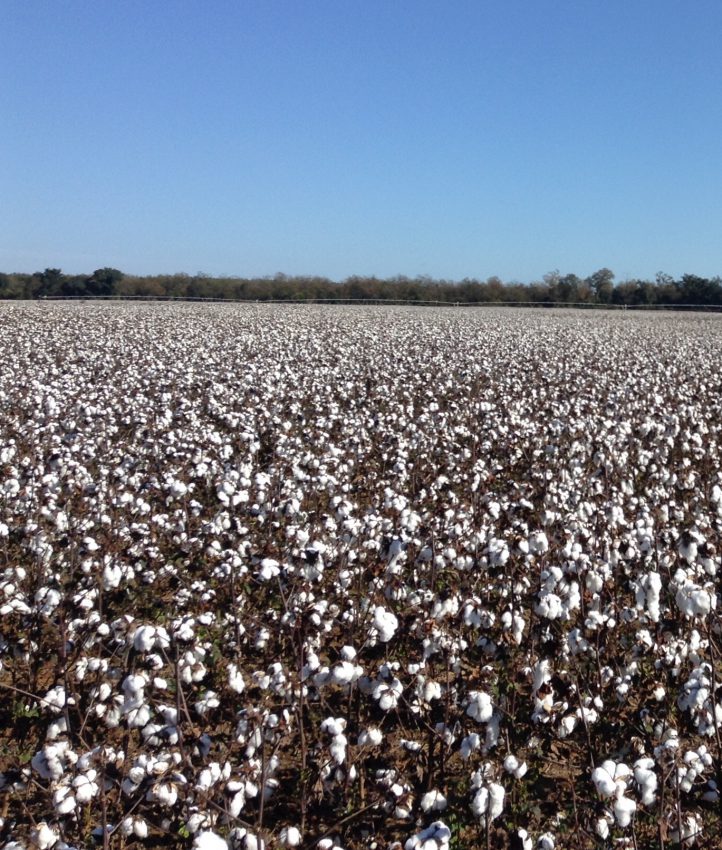
Harvest was my favorite season on the cotton farm. The weather was usually cooler at cotton picking time, making the labor a bit less unpleasant. The trips to the cotton gin in Locust Grove, riding in the back of Daddy’s truck, were a special treat. I could usually expect a Coke and a pack of peanuts to enjoy while the cotton was unloaded, weighed, and ginned.

For Daddy, those trips were the payoff for months of hard work in the fields. Perhaps that is why he let us share some of the profits, paying his children the same 3 cents/pound the other laborers received for picking cotton – the only farm chore for which I was ever paid. But more importantly for me, the harvest meant six months of rest before we started the cycle anew the following Spring.

When Jesus spoke the words above to his disciples after his encounter with the Samaritan woman at the well, cotton was the last thing on his mind. His focus was on the harvest of souls for eternal life. Responding to the disciples’ concern for his physical nourishment, Jesus said, “My food is to do the will of him who sent me and to finish his work.” (John 5:34) As his disciples, that should be our food as well.

During my time in Denver, Colorado, my pastor, Rick Ferguson, would often talk about approaching Denver on I-70 from the Rocky Mountains to the west of the city, seeing the city lights spread below, and grieving for the lost residents who would never know Christ. Like our Lord, he had the spiritual vision to see the fields ripe for the harvest of souls.

As Christ’s followers, we should have that same concern for the lost and that same spiritual vision to see the fields around us that are always ripe for harvest. There should never come a season of rest from that work. Unlike with cotton, it is not always readily apparent to us when a soul is ripe for harvest. But never forget that we are not the reaper of lost souls. That is the responsibility of our Heavenly Father through the work of the Holy Spirit.

Our job is simply to be spiritually discerning and obedient to his leading, preparing the soil of people’s hearts as we live a life grounded in Biblical principles, planting seeds of the gospel as we interact with the lost around us, and being prepared to share our personal gospel story when the time is appropriate.

The joy shared by the sowers and reapers at the harvest of souls far surpasses that joy I felt when the cotton harvest was completed. But unlike those cotton harvests, we may not always see the fruit of our labor in this life. My Granny Wells never knew the ultimate spiritual impact she had on me – the fruit of her labor did not ripen in my life until years after her death. But because of her faithfulness, I look forward to sharing that joy with her one day in Glory.

Recently I read the story of Dr. William Leslie, who began serving as a medical missionary in a remote corner of the Congo in 1912. After 17 years he returned to the United States a discouraged man, believing he had failed to make any discernible impact for Christ. He died nine years after his return, regarding himself a failure in his life’s calling. In 2010, a network of churches was discovered in eight villages scattered along 34 miles of the Kwilu River where Dr. Leslie had been stationed. When the tribal people were questioned about the origins of those churches, they only knew that it had been the work of a man named “Leslie” some 100 years earlier.

We never know who’s watching or whose life we’re impacting. We never know when the fruits of our labor as witnesses for Christ will ripen. But that joy Christ talks about in this passage will be ours one day, perhaps in this life, but most assuredly and most importantly, in the life to come, when we are reunited in the presence of our Savior with those we helped steer to the foot of the cross.

“But the one who received the seed that fell on good soil is the man who hears the word and understands it. He produces a crop, yielding a hundred, sixty, or thirty times what was sown.” (Matt. 13:23)

Note: All Scripture from the New International Version (NIV)
Remembering Daddy

Series: Lessons From The Cotton Field

“For the kingdom of heaven is like a landowner who went out early in the morning to hire men to work in his vineyard. … When evening came, the owner of the vineyard said to his foreman, ‘Call the workers and pay them their wages, beginning with the last ones hired and going on to the first’.

The workers who were hired about the eleventh hour came and each received a denarius. So when those came who were hired first, they expected to receive more. But each of them also received a denarius. When they received it, they began to grumble against the landowner. ‘These men who were hired last worked only one hour,’ they said, ‘and you have made them equal to us who have borne the burden of the work and the heat of the day.’

But he answered one of them, ‘Friend, I am not being unfair to you. Didn’t you agree to work for a denarius? Take your pay and go. I want to give the man who was hired last the same as I gave you. Don’t I have the right to do what I want with my own money? Or are you envious because I am generous?’ So the last will be first, and the first will be last.” (Matt. 20:1, 8-16)

Cotton farming in the days of my youth was very labor intensive. With a supporting cast of five children and a hard-working wife, my father could handle most of the work of preparing the soil and planting the seeds. But the process of chopping cotton, as I described in my last post, and gathering the harvest required him to hire additional help. After breakfast, he often began his workday by driving to various homes of farm workers in the area and transporting them to our fields.

The prevailing daily wage for chopping cotton in those days was $3.00. Unlike the scenario described in the Parable of the Workers in the Vineyard in the passage above, all the workers started their workday at the same time and worked the same number of hours as every other worker. While some were likely more skilled at chopping cotton than others, all received the same daily pay. (Except for the children of the landowner who received nothing! Did I mention that already?)

At harvest time, Daddy would hire those same laborers to gather the crop. But rather than paying a daily wage for picking cotton, each picker was paid a piece rate of three cents for every pound of cotton picked. A highly skilled picker could gather 200 pounds of cotton daily, doubling the wages they earned for chopping cotton. At the end of the workday, each worker’s burlap spread of cotton was tied up and weighed. Daddy carried a ledger in the pocket of his overalls in which he recorded each one’s daily pickings, totaling it at the end of the week to pay each his due.

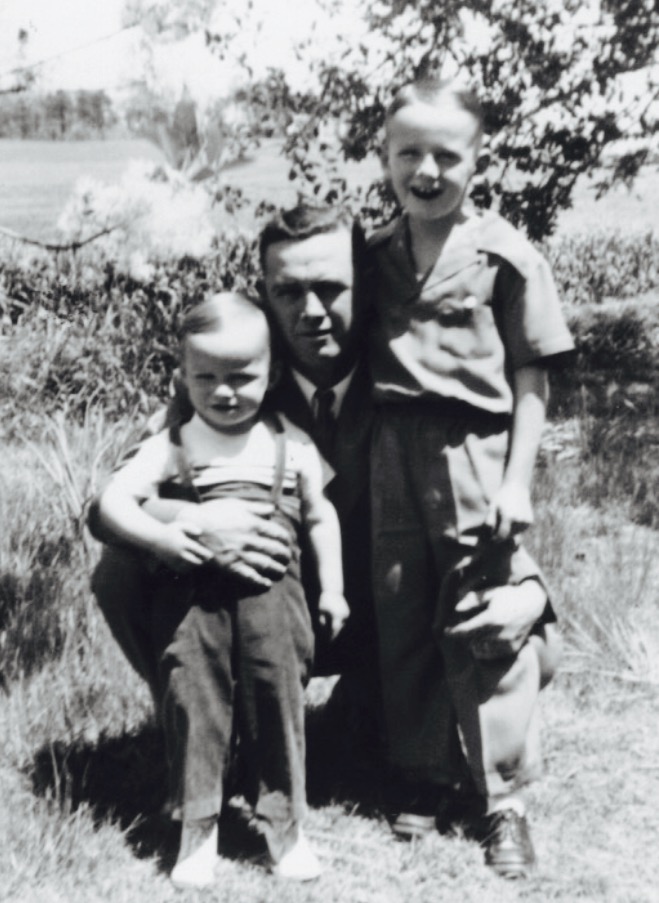
Writing this series of articles about growing up on a cotton farm has brought back many memories of my childhood and given me time to pause and reflect about my father, Sammie Paul Wells. While he rarely talked about his own childhood, life had surely been a struggle for him growing up on a farm himself. His own father died when Daddy was only ten years old. He was sixteen when the Great Depression hit in 1929. My selfish complaints about not being paid for chores on the farm seem petty when I consider what those early years must have been like for him.

We are all shaped by life experiences. His own life experiences gave Daddy a keen appreciation for the value of hard work. While he had his faults, laziness was certainly not among them. Hard work had undoubtedly sustained him through many difficult times and engendered within him a driving desire to be an independent businessman. Armed with only an eighth grade education, he not only ran a successful farm, he also maintained a profitable upholstery business for those times when there was no work to do in the fields.

Given his skills as a master upholsterer, I always felt he could easily have charged more for his services. He didn’t just recover furniture, he rebuilt it completely, replacing springs and batting to restore each piece as close as possible to its original condition. The quality of his work was unparalleled. But he had a sense of what his labor was worth and refused to charge more than that, no matter the market demand or the prices charged by his competitors.

As I consider those things about my father in light of this parable from Matthew 20, I’m sure he would have never entertained the idea of paying someone who chopped cotton for only the last hour of the day the same $3.00 he paid those who had borne the burden of the work in the stifling Georgia sun all day long. Had he done so, he would have soon lost many of the loyal workers he depended upon.

But this parable from our Lord is not a picture of man’s sense of a fair day’s wage for a fair day’s work. It is a picture of grace – the unmerited favor of God. In this parable, my father is not the landowner. He is that last hired worker who, like the thief on the cross, came to experience the unmerited favor of God in the eleventh hour of his life, placing his faith in Christ at the age of 59 while on his deathbed in the VA Hospital in Atlanta, Georgia.

And because of that, I can join so many others this weekend in saying, “Happy Father’s Day in heaven, Daddy!” And I will be eternally grateful for his close friend, Tony Hay, who refused to let him enter eternity without hearing about the saving grace of our Lord Jesus Christ once last time.

“The thief had nails through both hands, so that he could not work: and a nail through each foot, so that he could not run errands for the Lord; he could not lift a hand or a foot toward his salvation, and yet Christ offered him the gift of God; and he took it. Christ threw him a passport, and took him into Paradise.” – D.L Moody

Chopping Cotton

By Julian Wells

Series: Lessons From The Cotton Field

“Other seed fell among thorns which grew up and choked the plants. … The one who received the seed that fell among the thorns is the man who hears the word, but the worries of this life and the deceitfulness of wealth choke it, making it unfruitful.” (Matt. 13: 7, 22)

imageI vividly recall my first day working in my father’s cotton fields. When I was around eight years old, Daddy decided it was time I learned how to “chop cotton”. After he shortened the handle of my own personal hoe, I crawled into the back of our 1950 Chevy pickup truck along with several other workers and we headed to the field just above our house.

For those of you unfamiliar with the term, chopping cotton is the first hoeing that occurs after the young cotton plants become sturdy enough to withstand the process. It involves thinning out excess plants, leaving groups of two or three spaced apart by about the width of the hoe blade. The crusty soil is then tilled with the hoe and gathered to reinforce the remaining plants while removing various weeds, such as Johnson grass, coffee weeds, and thorns. The end result is similar to the photo shown here.

I was actually pretty excited over the thoughts of spending the day working alongside my father and maybe earning a little spending money. The prevailing wage for chopping cotton at the time was $3/day. (I soon discovered to my dismay that it did not apply to family members!) However, the excitement I felt that morning quickly faded as the heat of the midday Georgia sun began to take its toll and the length of the rows increased, taking us far from the next refreshing drink from the communal water jug.

A few weeks later, we would return to the fields to remove any additional weeds that had sprouted up around the cotton plants since the initial chopping. Daddy would then plow the ground between the rows one last time and speak those words that soon became music to my ears, declaring the crop to be “laid by”, meaning work in the cotton fields was complete until the harvest.

imageLittle did I know at the time that I was learning a foundational Biblical principle found in Jesus’ Parable of the Sower. We spent many hours in those fields removing weeds that if left unattended would have choked the young cotton plants and greatly reduced the yield at harvest time. Thanks to meticulous soil preparation and timely hoeing and plowing, Daddy rarely failed to achieve his goal of harvesting at least a bale (500 lbs.) of cotton per acre planted.

In the Parable of the Weeds, also found in Matthew 13, our Lord revealed Satan as the sower of weeds designed to make our lives unfruitful. Those weeds may be sins that entangle us, restricting our spiritual growth, and hindering our testimony. (Heb. 12:1) They usually involve activities more aligned with the world’s values than with God’s.

Weeds may be nothing more than trivial pursuits which keep us from setting aside a daily quiet time of spiritual refreshment alone with the Lord, praying and studying His Word. In this day of 200 television stations available 24 hours a day with a simple click of the remote control, and smartphones beckoning us to check out the latest text message, tweet, or Facebook post, we are bombarded with more potential distractions than ever before.

Our personal time bandits may even be worthwhile activities. But just as overly crowded cotton plants strip limited nutrients from the soil and block out sunlight needed for maximum blossoming, too many worthwhile activities can rob us of spiritual nourishment when they leave little time for rest or appropriate quiet time with the Lord. That was Martha’s mistake when she asked Jesus to tell her sister Mary to help her in the kitchen. Our Lord was quick to inform Martha that by sitting “at the Lord’s feet, listening to what he said“, Mary had “chosen what is better“. (Luke 10:39, 42)

Ephesians 5:15-16 (ESV) says “Look carefully then how you walk, not as unwise but as wise, making the best use of the time, because the days are evil.”  No matter where you are in your spiritual walk, you will always encounter those weeds that can choke the impact of the gospel and make you unfruitful. In fact, the stronger we grow in our relationship with the Lord, the more weeds Satan seems to sow.

You will never hear the Lord declare you “laid by” until the day he calls you home. The work we’ve been called to do is too important and the enemy is too formidable.

What people, places, or activities take up the space in your life that is meant for God? Is it time for you to start chopping?

“Time is the most valuable coin in your life. You and you alone will determine how that coin will be spent. Be careful that you do not let other people spend it for you.” – Carl Sandburg

Note: All Scripture from the New International Version (NIV) unless otherwise noted.

The Eternal Question

Series: Reflections From John

image“Now while he was in Jerusalem at the Passover Feast, many people saw the miraculous signs he was doing and believed in his name. But Jesus would not entrust himself to them, for he knew all men. He did not need man’s testimony about man, for he knew what was in a man.” (John 2: 23-25)

Are you a Christian? Do you believe? Are you saved? Have you accepted Christ as your personal Savior? Have you asked Jesus into your heart? If you died today, do you know where you would spend eternity? All of these are versions of the eternal question.

Posing the eternal question can make us uncomfortable. If we have doubts about someone’s salvation, failure to ask it makes us unloving. But failing to resolve the question in our own hearts can make us eternally condemned. And that makes it the most important question any of us will ever face.

My first encounter with the eternal question occurred in my teenage years during revival week at Jenkinsburg Baptist Church in my hometown of Jenkinsburg, Georgia. Like so many of the old-time preachers, Reverend Price’s pitch to me was high-pressure. He tried his best to scare me out of hell and into heaven, a technique that some have characterized as terror evangelism. I just couldn’t reconcile the Jesus he was proclaiming with the Jesus my Granny Wells was always talking about- the Jesus who was her constant companion.

But a seed was planted – a seed that would germinate ten years later. Upon reexamining the Gospel from a rational and intellectual perspective, I eventually came to the conclusion that the gospel accounts of Matthew, Mark, Luke, and John and Jesus’ declarations about himself were indeed true. Claiming the promise of John 3:16 that I had recited so many times in the Vacation Bible Schools of my youth that “whosoever believeth in him should not perish, but have everlasting life” (KJV), I was baptized at Florence Baptist Church in Forest City, North Carolina at the age of 24.

For the next twenty years, very little changed in my relationship with the Lord. I was content that those questions Reverend Price had pounded into me during that revival had been resolved. Secure in my salvation, I was confident that should my life meet an early end, my eternal destination was assured. But I was trying to live the Christian life as best I knew how in my own strength and wisdom – resources which proved woefully inadequate for the inevitable storms and temptations of life.

Thankfully, the Lord did not leave me in that condition. As he drew me to His Word, I began to pray as I had witnessed Granny Wells pray, speaking with the Lord as a personal friend, rather than a distant Deity. One morning while driving to work in Bradford, Pennsylvania, the Holy Spirit spoke to my heart in a way I had never before experienced, saying “When are you going to stop trying to do this on your own and learn to trust in me?” I was so overwhelmed by the presence of God that I pulled off the road and surrendered my life right then and there, confessing Christ once and for all as my Lord.

imageThe year was 1994 – the same year that Granny Wells went home to be with the Lord. Coincidence? … I don’t think so. She was a tremendous prayer warrior and I believe her prayers for me became all the more powerful the day she entered heaven. God only knows how many loved ones I will be reunited with one day in Glory because of her Godly influence and her faithful intercessory prayers.

After languishing in a nursing home for several years, she told me in one of our last conversations, “Julian, I don’t know why the Lord leaves me here.” I didn’t have an answer for her then, but I have one now. I look forward to sharing it with her when the Lord calls me home.

As far as I can recall, she never asked me any version of the eternal question. But having lived on a farm all her life, she knew the importance of preparing the soil of my heart so that one day the truth of the Gospel would take root there.

In 2 Corinthians 13:5, Paul says “Examine yourselves to see whether you are in the faith; test yourselves. Do you not realize that Christ Jesus is in you – unless, of course, you fail the test?”  It is not my place or the purpose of this post to judge the authenticity of anyone’s relationship with the Lord. But it is my responsibility as a faithful witness to share my gospel story and the truths of God’s Word to help others examine themselves.

2 Corinthians 5:10 tells us that we will all stand before the judgment seat of Christ one day and our eternity will hang in the balance. The eternal question, however we choose to express it, will be supremely relevant then. But there will be no pleading our case, no opening or closing statements, no testimony from eyewitnesses, no presentation of physical evidence, and no character witnesses. Because the One sitting on that judgment seat does not need man’s testimony – he already knows our hearts.

How tragic it would be to rest in a false sense of security concerning our answer to the eternal question, only to be reminded when it is everlasting too late of perhaps the most sobering passage in all of Scripture:

“Not everyone who says to me, ‘Lord, Lord’, will enter the kingdom of heaven. Many will say to me on that day, ‘Lord, did we not prophesy in your name, and in your name drive out demons and perform many miracles?’ Then I will tell them plainly, ‘I never knew you. Away from me, you evil-doers!'” (Matt. 7:21-23)

Note: Unless otherwise noted, all Scripture references taken from the New International Version (NIV)

Cleansing The Temple

Series: Reflections From John

imageIn the temple courts he found men selling cattle, sheep and doves, and others sitting at tables, exchanging money. So he made a whip out of cords, and drove all from the temple area, both sheep and cattle; he scattered the coins of the money changers and overturned their tables. To those who sold doves he said, ‘Get these out of here! How dare you turn my Father’s house into a market!’ His disciples remembered that it is written: ‘Zeal for your house will consume me.’” (John 2:16-17)

According to tradition, the commercial activity in the temple which had upset our Lord had once taken place outside the temple to support the sacrificial needs of Jewish pilgrims who often traveled long distances to observe the Passover. It was apparently moved into the Court of the Gentiles so that the priests could also profit from them.

But what the priests saw as convenient and profitable violated the strict rules which were designed to maintain the sanctity of the temple and provide an environment that facilitated worship and a focus on God. I don’t believe the priests found a loophole somewhere in Leviticus to allow for this. And our Lord has a low tolerance for placing the concerns of men above the concerns of God. Just ask Peter! (Matt. 16:23)

Under the New Covenant sealed by the blood of Christ, God took religion from the realm of external and made it internal. Our temple is no longer a building. 1 Corinthians 6:19-20 says “Do you not know that your body is a temple of the Holy Spirit, who is in you, whom you have received from God? You are not your own; you were bought at a price. Therefore honor God with your body.”

Just as worship must have been greatly hindered by the merchants and money-changers in the temple, the Spirit’s work in our lives is hindered by those things which take our focus off of God and undermine God’s moral will for our lives. While Jesus sacrificed for our sins “once for all” on the cross of Calvary, his death did not negate our need for cleansing of those sins we still wrestle with. Galatians 5:17 says “For the sinful nature desires what is contrary to the Spirit, and the Spirit what is contrary to the sinful nature. They are in conflict with each other, so that you do not do what you want.”

Those sins that beset us may not threaten our salvation, but they damage our relationship with the Lord and prevent us from experiencing the abundant Spirit-filled life Jesus desires for each of us. (John 10:10) The Spirit can never thrive in a heart in which the sinful nature is firmly entrenched.

To quote the great evangelist D.L. Moody,

“I firmly believe that the moment our hearts are emptied of pride and selfishness and ambition and self-seeking and everything that is contrary to God’s law, the Holy Spirit will come and fill every corner of our hearts. But if we are full of pride and conceit and ambition and self-seeking and pleasure and the world, there is no room for the Spirit of God. And I believe many a man is praying to God to fill him when he is full already with something else. Before we pray that God will fill us, I believe that we ought to pray that he would empty us.”

And so, just as Jesus cleansed the temple, we must also cleanse our hearts of those things that are contrary to the concerns of God – things that choke the Word and make us unfruitful. This includes trivial pursuits that crowd our schedules, leaving us little time for quiet communion with the Lord and meditating upon the Scriptures which are able to impart Godly wisdom to counteract the daily assaults of the world upon our thinking.

Such cleansing is not a one-time event. John placed this account of the cleansing of the temple earlier in Jesus’ ministry than the Synoptic Gospels, leading many to question if they refer to the same event. Personally, I believe Jesus encountered such activities at the temple on multiple occasions and likely responded similarly each time.

And so it is with us. It would have been convenient if the Lord had removed our sinful nature when the Holy Spirit took up residence in our heart at salvation, but he chose not to. So we must be continually aware of its impact and attentive to emptying ourselves of those things that rob us of our joy and undermine the Spirit’s work in our lives.

And that, my friends, is what cleansing is all about. Ephesians 4:31 says “Get rid of all bitterness, rage and anger, brawling and slander, along with every form of malice.” Paul could have easily added many other detrimental traits to that command.

In fact, he provides us a fairly comprehensive list in Galatians 5:19-21. I encourage you to check it out, compare those traits to your own sinful inclinations, and let the cleansing begin. I’m confident you’ll be glad you did.

“If we confess our sins, he is faithful and just and will forgive us our sins and purify (cleanse) us from all unrighteousness.” (1 John 1:9)

Note: All Scripture taken from the New International Version (NIV)