A Miracle At Cana

Series: Reflections From John

“On the third day a wedding took place at Cana in Galilee. … When the wine was gone, Jesus’ mother said to him, ‘They have no more wine.’” (John 2:1,3)

image

The account of Jesus turning water into wine at the wedding in Cana has provided background material for numerous jokes and generated lively debates through the centuries. Christians disagree over whether the wine that resulted was alcoholic, or simply unfermented grape juice. The answer to that question usually depends upon one’s view toward the social consumption of alcoholic beverages. Personally, I’m convinced it was the real stuff!

On the surface, one cannot help but wonder why John even included this account in his gospel. It seems to be a strange miracle with little divine purpose. No other gospel writer found it worthy of telling. Jesus even seemed initially reluctant to address his mother’s concern that the wine had run out, telling her “Dear woman, why do you involve me? … My time has not yet come.” (John 2:4)

Neither did this miracle appear to serve a great public purpose at the time. In fact, only Mary, Jesus, the disciples, and the servants likely knew that a miracle had even taken place. Jesus generated no great spectacle surrounding the event. He didn’t stand over the water pots, wave his hands over them, or utter some powerful prayer. He simply gave instructions to the servants to fill the pots and serve the contents.

Given that John elected to detail only seven miracles in his gospel, why include this one? Although some have tried to use this account to justify their consumption of alcoholic beverages, I don’t believe John’s purpose was to resolve this debate among Christians.

Mary’s instructions to the servants to “Do whatever he tells you” (John 2:5) certainly serve a great spiritual purpose, reminding us of the importance of being sensitive to the leading of the Holy Spirit in our lives and obeying him promptly when his directions are clear. This lesson has served me well through the years taking me down many worthwhile paths I might have avoided otherwise – a topic I covered in “The Paths Of Life”.

Mary’s actions also provide a picture of effective prayer. All of us are likely guilty of suggesting to God how he should respond to our prayers, as though we know what is best. But we don’t see what God sees and his solutions often far exceed our wildest expectations. I doubt that Mary had any idea what was about to take place, any more than we do when we bring a problem to him in prayer ourselves. She doesn’t suggest what to do or how to do it. She just brought her problem to Jesus, trusting him with the solution.

While these are worthwhile spiritual applications to be taken from this account, I don’t believe John was thinking of either of them when he decided to include this miracle. I believe John’s sole purpose for including this miracle among the seven he details is stated clearly in verse 11. “This, the first of his miraculous signs, Jesus performed at Cana in Galilee. He thus revealed his glory, and his disciples put their faith in him.”

John likely recorded this miracle simply because it was the first miracle he saw Jesus perform, thus sealing in his mind once and for all that Jesus was more than a teacher or prophet – he was the Son of God, just as John the Baptist had proclaimed. John concedes at the end of Chapter 20 that Jesus performed “many other miraculous signs” which he did not record. But he chose seven specifically “that you may believe that Jesus is the Christ, the Son of God, and that by believing, you may have life in his name.” (John 20: 30-31)

All of us have a story to tell. If you are a follower of Christ, you have your own “gospel” story – a term that simply means “good news”. You too can point to a time in your life when the veil over your heart was first lifted and Christ revealed himself in a way that was undeniable and that forever changed your heart, renewed your outlook on this life, and transformed your expectations of life beyond this one.

Share your gospel story with someone this Easter season. As Mary commanded the servants at the wedding, do whatever The Lord tells you. Jesus has commissioned us all to be his “witnesses in Jerusalem, and in all Judea and Samaria, and to the ends of the earth.” (Acts 1:8) That hour you first believed might not have resulted from something as dramatic as the miracle John witnessed, but it is no less life-changing. And it is likely just as compelling to someone desperate for the hope they see in you – a hope that only God can provide.

“How precious did that grace appear, the hour I first believed.” – Amazing Grace, John Newton

Note: All Scripture references from the New International Version (NIV)


A Man Called Peter

By Julian Wells

“The first thing Andrew did was to find his brother Simon and tell him, ‘We have found the Messiah’ (that is the Christ). And he brought him to Jesus. Jesus looked at him and said, ‘You are Simon, son of John. You will be called Cephas’ (which, when translated, is Peter). (John 1:41-42)

Of all the original disciples, Peter is perhaps my favorite. I see qualities in his personality that I often wish were more ingrained in my own. Those who know me and have interacted with me through the years would likely describe me as quiet, introverted, and contemplative – someone who often overanalyzes a situation before taking action. My wife informs me that her first impression was that I was “stuck up”.

Peter was none of those things. Peter was impulsive, often speaking or acting before fully thinking things through. He did not hesitate to say what was on his mind – a trait which sometimes made him the target of Jesus’ rebukes. During Jesus’ public ministry, Peter served as the de facto spokesman for the disciples.

When Jesus asked his disciples in Matt. 16:13 “Who do people say the Son of Man is?”, it was Peter who proclaimed “You are the Christ, the Son of the living God.” It was Peter who said what I’m sure the others were thinking when Christ told them of his impending crucifixion, “Lord, this shall never happen to you!” (Matt. 16:22), drawing a stinging rebuke from the Lord. It was Peter who confidently declared “Even if all fall away on account of you, I never will. …Even if I have to die with you, I will never disown you.” (Matt. 26:33 -35) But then it was also Peter who later lied when confronted at Christ’s trial, “I don’t know the man!” (Matt. 26:74)

But not only was Peter quick to speak, he was also a man of action. When Jesus called him to become a fisher of men, he didn’t hesitate – he took immediate action. When he saw Jesus walking on the water, Peter was the one who left the boat to walk with him.  When the crowd came to take Jesus, it was Peter who drew his sword to prevent it. And it was Peter who arrived first at the tomb when the women reported to the disciples that Jesus’ body was missing.

John tells us that before Peter was Peter, he was Simon, brother of Andrew. Andrew had been a disciple of John the Baptist, but followed Jesus without hesitation when John pointed to Christ as the “Lamb of God”. The first thing Andrew did was find Simon and bring him to Jesus. According to John, Jesus’ first words to Simon were, “You are Simon, son of John. You will be called Cephas.” (John 1:42)

Cephas is the Aramaic name for rock; Petros (or Peter) is the Greek equivalent. If our knowledge of Peter were limited to the gospel accounts, it would be hard to justify changing Simon’s name to be synonymous with rock. While he walked with Jesus, Peter was often anything but. He started to sink like a rock when he tried to walk on water. Peter talked a good game, but his actions didn’t always match his rhetoric.

So what did Jesus see that others didn’t? … He saw Peter’s future. God always sees our future. He knows our potential. Peter is perhaps the best Biblical illustration that God knows us better than we know ourselves. When Peter confidently proclaimed in the Upper Room on the night of Jesus’ arrest that he was ready to die with Christ, he likely believed that with all his heart. But Jesus knew that before that long night would be over, Peter would disown him three times. (John 13:37-38)

When God looks at us, he sees beyond our present to our potential and our future. He knows the plans he has for us (Jer. 29:11), and he’s always working things together to fulfill those plans. (Rom. 8:28)  God had great plans for Peter, who would become known as a “pillar” of the early church. (Gal. 2:9) In that sense, he was that rock upon which Jesus said He would build His church. (Matt. 16:18) Jesus foresaw Peter preach that amazing message on the Day of Pentecost recorded in Acts 2, which resulted in an influx of 3,000 new believers.

He might have denied Christ after His arrest, but after he encountered the resurrected Lord, he never denied Him again. He was imprisoned numerous times for preaching the gospel and healing people in the name of Christ. When challenged by the Sanhedrin for those activities, Peter boldly replied “We must obey God rather than men!” (Acts 5:29)

Did Peter continue to suffer failures? … Absolutely! … Don’t we all?  But just as I’m glad that my wife’s first impression of me did not define our future together, I’m overjoyed that in spite of my long and often halting and erratic faith journey, God never lost sight of my potential. He continued to mold me more into the image of his Son and used me in ways I would never have imagined when he first called me to himself … especially considering how different he made me compared to a man called Peter.

“I may not be the man I want to be; I may not be the man I ought to be; I may not be the man I could be; I may not be the man I truly can be; but praise God, I’m not the man I once was!” – Martin Luther King, Jr.

Note: All Scripture references from the New International Version (NIV).


Making God Visible

Series: Reflections From John

“The next day John saw Jesus coming toward him and said, ‘Look, the Lamb of God, who takes away the sin of the world! … I have seen and I testify that this is the Son of God. … He must become greater; I must become less.’” (John 1:29, 34, 3:30)image

We live in a time of great anticipation of Christ’s promised return. John the Baptist came along at a time of great anticipation of Christ’s first appearance. In fact, the anticipation was so great that when John began to preach in the Judean Desert, Luke tells us that “The people were waiting expectantly and wondering in their hearts if John might possibly be the Christ.” (Luke 3:15)

John put those speculations to rest quickly, deflecting attention from himself, and declaring his unworthiness to even untie the sandals of the One who would come after him. When the priests and Levites pressed him about his own identity, John replied in the words of Isaiah the prophet, “I am the voice of one calling in the desert, ‘Make straight the way for the Lord.'” (John 1:23)

All the Gospel accounts mark the appearance of John the Baptist as the beginning of Christ’s ministry. John had come to the desert preaching a baptism of repentance and had gained a following of his own. But once God revealed to him at his baptism of Jesus that the long awaited Messiah had come, John’s primary message changed immediately to “Behold the Lamb of God!” (John 1:36)

When John’s disciples later began to complain that everyone was flocking to Jesus, John replied with those familiar words that are so rich with application for anyone who considers themselves followers of Christ, “He must increase, but I must decrease.”  (John 3:30 KJV) John understood that a true disciple humbles himself and exalts Christ.

Our culture today is enamored with celebrity and all too often that fleshly desire for fame and fortune bleeds over into Christian ministry, where it has no place. Preaching a message that tickles the ears, promotes book sales, and elevates man has created many Christian celebrities today. But their lifestyles often stand in stark contrast to the heroes of our faith found in the Scriptures- men like John the Baptist. John understood that there should be only one celebrity in the Christian faith, and his name is Jesus Christ, King of kings, and Lord of lords.

In my last posting, I said that my sister made God visible to a world desperate for the hope that only he can provide. At the time of John’s ministry, the invisible God made himself visible in the person of Jesus Christ. John was simply called to introduce him. But his actions and words reveal the key to being effective witnesses of Christ ourselves, making God visible through our character and the conduct of our lives.

When John’s ministry was growing, it must have been tempting for him to exalt himself. His disciples had obviously grown concerned that the size of his congregation had begun to dwindle as people started to flock to “that man”. (John 3:26)  But John understood that “that man” was none other than the Son of God. Knowing that his moment in the spotlight and his declining popularity were all a part of God’s sovereign plan and purpose, John’s new focus became making Christ preeminent.

Just as John knew his God-ordained role, those of us who follow Christ know ours as well. We are called to be witnesses, deflecting attention from ourselves while pointing others to our Lord. Those familiar words, “He must increase, but I must decrease” create a vivid word picture of the process of sanctification, which begins at the moment of our conversion and continues throughout our lives. To be sanctified is to give the Holy Spirit greater control over our hearts and minds, while making less provision for the flesh.

In Galatians 5:16 Paul writes, “So I say, live by the Spirit, and you will not gratify the desires of the sinful nature.” When we are intentional about that, Christ increases His impact in and through us while our sinful nature decreases its hold. As that takes place, we are transformed more into the image of Christ (2 Cor. 3:18), making Him more visible to a world searching for the hope that we have.

Make God visible to someone God places in your path this week.

“How much larger your life would be if your self could become smaller in it!” – G.K. Chesterton

Note: Unless otherwise noted, all referenced Scripture is from the New International Version (NIV).


A Servant’s Heart

“But the fruit of the Spirit is love, joy, peace, patience, kindness, goodness, faithfulness, gentleness, and self-control. Against such things there is no law.” (Galatians 5:22-23)

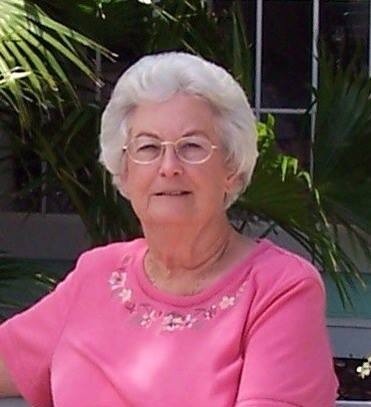
(In memory of my sister, Paulette Wells Cargile, on her birthday, which fittingly coincides with Valentines Day. This post is adapted from the eulogy I delivered at her funeral in 2007. While no words could ever adequately convey the love I had for her or the impact she had on so many, may they remind those of us who knew her best just how special she was. She is greatly missed.)

image

It’s been said that there are two kinds of people in this world- givers and takers. There’s no question that my sister, Paulette was a giver. After our mother’s death, she spent countless hours scanning photos from Mama’s large collection and assembling them into digitized albums for all her siblings. Her last gift to us was a very special DVD of the fondest memories of her life. I will be forever grateful that she was able to complete that project before her back pain became too severe.

When her daughter, Elaine informed me that Paulette had requested that I preach her funeral, initially I struggled to find the right words that would serve as a fitting tribute to her life. But as I watched that DVD on the day after her passing, observed the hundreds of photos she had scanned, and paid close attention to the songs she chose to play in the background as those pictures were displayed, I couldn’t help but notice how well it conveyed a clear sense of the values that defined her life. In a sense, through that DVD she preached her own funeral because she had given me just what I needed to start preparing my remarks.

She titled it “Paulette’s Album”, but she was not the central character. As you watch it, you quickly realize just how richly blessed she felt her life was, how many people she cherished, and how many lives she touched. As I listened to the background music she chose, I was reminded that Paulette’s life was packed full of love, joy, and laughter.

Two of the songs she chose were “I Hope You Dance” and “Life’s a Dance”. Paulette loved to dance. When we were growing up, she would try to coax me and my brother, Ronnie to dance with her. We rarely cooperated, but she didn’t let that stop her. When American Bandstand came on, she would grab the bedpost and dance all by herself.

imageIn a lot of ways, I think Paulette saw life as a dance. She could relate to those lyrics, “Life’s a dance, you learn as you go. Sometimes you lead- sometimes you follow. Don‘t worry about what you don‘t know. Life’s a dance, you learn as you go.” She seemed to always take life as it came at her. When she had the choice to sit it out or dance, she danced, never allowing life’s inevitable ups and downs to change her outlook or cause her faith to waver in any way.

As we poured over those snapshots of her life, one thing was constant- she always had that familiar smile on her face. I call it her “Puddin” smile, referring to her nickname growing up. As I reflect on that unique smile, I realize that it was a genuine reflection of the joy that was in her heart. Paulette truly enjoyed life and the people in her life.

Especially evident in the last days of her life was the peace that was in her heart. Isaiah 26:3 says, “Thou will keep him in perfect peace whose mind is stayed on Thee, because he trusteth in Thee.” (KJV)  As it became increasingly clear that Paulette’s health was deteriorating far more rapidly than any of us ever anticipated, she remained calmer than any of us. When the doctor delivered the devastating news that she had an advanced stage of lung cancer, sensing all the implications of that diagnosis, she responded “Well I’ve had a good life.” And it was clear that her response was not a façade she painted for our benefit.

Paulette did not live in the past. As she pondered the prospect that her days were drawing to a close, there was no brooding over mistakes she had made or regrets that she didn’t accomplish all she wanted to accomplish. Peace like that is contagious. Driving home from the hospital after Paulette’s passing, my wife asked her daughter, Elaine how she was holding up. She responded “You know, I have a peace about it.” That kind of peace only comes as a natural byproduct of a deep, abiding faith in Almighty God.

Paulette demonstrated enormous patience and perseverance scanning and compiling all those photos. But the kindness behind that project and so many other selfless actions through the years are what I’ll cherish the most. Philippians 2:3-4 says “Do nothing out of selfish ambition or vain conceit, but in humility consider others better than yourselves. Each of you should look not only to your own interests, but also to the interests of others.” I can’t read that passage without thinking of Paulette. She truly had a servant’s heart.

I’ll also remember her good and gentle spirit. Speaking to wives in 1 Peter 3:3-4, Peter writes “Your beauty should not come from outward adornment, such as braided hair and the wearing of gold jewelry and fine clothes. Instead, it should be that of your inner self, the unfading beauty of a gentle and quiet spirit, which is of great worth in God’s sight.” Paulette was greatly treasured by all of us who were privileged to have known her, but more importantly, she was highly treasured by God.

Lastly, I’ll remember Paulette for her faithfulness. She was faithful to the Lord. She was faithful to her husband, James (affectionately known as Zorro). She was faithful to her children, Elaine and Teresa. She served faithfully as our mother’s caregiver in her last years. She was even faithful to cook a pot of my favorite butterbeans whenever I came home. And she remained faithful to the Cargile family after James’ death. In Rev. 2:10, Christ said “Be faithful, even to the point of death, and I will give you the crown of life.” Another star in Paulette’s crown- the star of faithfulness.

Those are the things I’ll remember about my dear sister- her love, joy, peace, patience, kindness, goodness, faithfulness, gentleness, and self-control. No matter the circumstances of her life, those traits were always evident. They came naturally because they were the fruit of the Holy Spirit who resided in her heart. (Galatians 5: 22-23)  Paulette made God visible to a world desperately in need of the hope that only he can provide.

If good works could get you into heaven as so many people falsely believe, I’m confident she qualified. I believe when she met Christ face to face, she heard those words “Well done, good and faithful servant! … Come and share your master’s happiness!” (Matt. 25:21)  But the Bible makes it clear that it wasn’t her works that assured her place in heaven today. “For it is by faith we are saved, and that not of works. It is the gift of God, lest any man should boast.” (Eph. 2:8-9)

For someone who was such a giver, she received the greatest gift available to mankind- the gift of eternal life based on her unswerving faith in Christ Jesus our Lord. She didn’t earn it and she couldn’t buy it. The price was already paid. All she had to do was step out in faith and accept it. And Paulette took care of that years ago.

The hope of her salvation and the source of her strength were both found in Christ alone. And His gift comes with so many fringe benefits for this life. Benefits like a very present help in times of trouble, direction for our paths, and the abiding presence of His Spirit. But the greatest benefit is the one Paulette enjoys today. She has entered into eternity with Christ. And I suspect that familiar “Puddin” smile on display in all those treasured photos pales in comparison to the one that is on her face right now.

Happy Birthday, Sis. I look forward to seeing you in heaven and reminiscing over the memories behind all those photos from our life here on earth. And maybe we’ll even dance again … if Zorro will only allow me to cut in!

image

In memory of Paulette, my brother, Ronnie, and all those loved ones awaiting us in Glory, enjoy <<“In Christ Alone“>>. For a genuine blessing, pay close attention to the lyrics and the Bible verses that accompany the presentation.

Note: Unless otherwise noted, all Scripture references from the New International Version (NIV)


Dispensing Truth With Grace

Series: Reflections From John

“The Word became flesh and made his dwelling among us. We have seen his glory, the glory of the One and Only, who came from the Father, full of grace and truth. … From the fullness of his grace we have all received one blessing after another. For the law was given through Moses; grace and truth came through Jesus Christ.” (John 1:14, 16-17)

image

C. S. Lewis once walked into a conference of religious leaders who were debating what unique aspect of Christianity sets it apart from all other religions. After asking what all the noisy discussion was about, Lewis brought the conversation to a quick close when he replied, “That’s easy. It’s grace.”

Grace has been defined as the unmerited, unearned, undeserved, favor of God. While it is indeed unique to Christianity among all the major religions, surveys consistently reveal that grace is not the first thing that comes to mind when those outside the faith think of Christians. That should be very convicting to those of us who consider ourselves followers of the One John describes as “full of grace and truth”.

Addressing this passage which concludes John’s prologue in his book, Vanishing Grace: What Ever Happened To The Good News?, Philip Yancey writes:

“The church has worked tirelessly on the truth part of that formula: witness the church councils, creeds, volumes of theology, and denominational splits over minor points of doctrine. I yearn for the church to compete just as hard in conveying what Paul calls the “incomparable riches” of God’s grace. Often, it seems, we’re perceived more as guilt dispensers than as grace dispensers.”

After leading Bible studies for almost twenty years, observing the actions of Christians for much longer than that, and honestly assessing my own tendency to stress truth over grace, I must concur with Yancey’s convicting words. The fact that those outside the faith don’t see us as grace dispensers likely explains why our personal evangelism efforts so often fall short.

Colossians 4:5 says “Be wise in the way you act toward outsiders; make the most of every opportunity. Let your conversation be always full of grace, seasoned with salt, so that you may know how to answer everyone.” The world is hungry for the truth of God’s Word, but if the truth we proclaim is not dispensed with grace and modeled in our lives, none of our words will matter.

Grace opens the door to allow truth to enter the hardest heart. As I examine my own faith journey, it is those individuals who dispensed truth with a healthy dose of grace who have had the greatest impact on me. As in all things, Christ provides us the perfect example. In his book, The Grace And Truth Paradox, Randy Alcorn writes,

“Grace and truth found their perfect union in Christ, but the rest of us tend to gravitate toward one or the other. Truth without grace breeds self-righteousness and legalism. Grace without truth breeds deception and moral compromise. The key to true Christian spirituality is to integrate these two qualities into life, imitating the character of Christ.”

John reminds us that “from the fullness of God’s grace, we have all received one blessing after another.” Having experienced the amazing and matchless grace of God, why would we ever withhold grace from others, no matter our differences? While we will often disagree with those outside the faith and sometimes even among ourselves within the faith on certain issues, we must be mindful that words of grace will always be more persuasive than insults.

This is especially true in the use of social media, where our written words often come across as more harsh than we realize or intend. As a follower of Christ, I’m often embarrassed and even angered by some of the comments I see posted by Christians and must confess to my own failings in that regard. I shudder when I consider the Biblical truth that I will one day give an account for every idle word I have spoken. (Matt. 12:36)  And that accounting will surely include those words I have posted on Facebook and Twitter as well.

The last Sunday School class I taught was called the “Truth Seekers”. And I will always strive to be a seeker and dispenser of truth. But in my Christian walk, I am increasingly mindful that I must also be a “Grace Dispenser”, speaking the truth in love, if the truth I’m attempting to convey is to draw others to the Christ I proclaim.

“If we minimize grace, the world sees no hope for salvation. If we minimize truth, the world sees no need for salvation. To show the world Jesus, we must offer full-orbed, unabridged truth and grace, magnifying both, never downsizing or apologizing for either.” – Randy Alcorn, “The Grace And Truth Paradox”

Note: All Scripture references from the New International Version. (NIV)